Google Ads

Performance advertising aligned with business goals

Google Ads work best when tied to real intent

Google Ads can be a powerful growth channel — when strategy, intent, and economics are aligned.

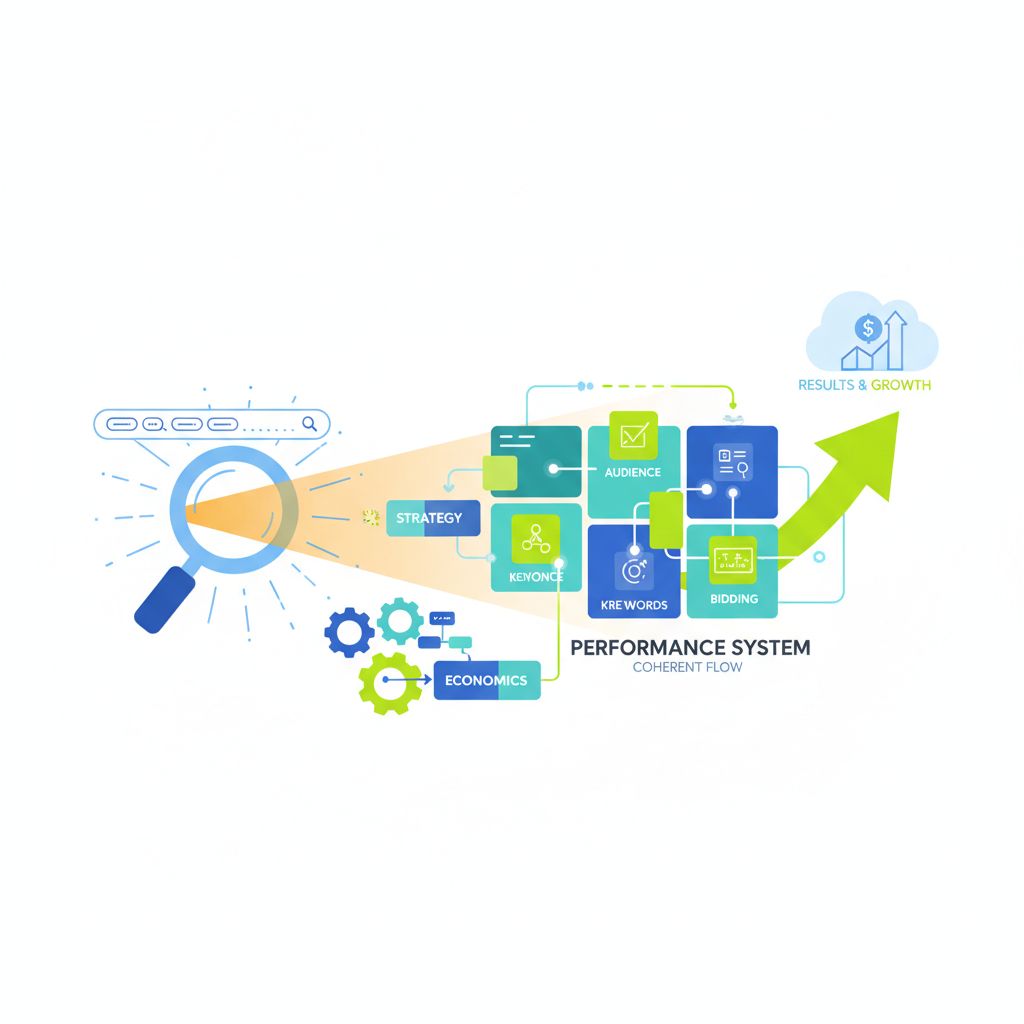
We approach Google ads as a performance system, not a collection of campaigns.
Get a free audit
Image

Intent-based strategy

Campaigns are built around search intent and decision stages, not just keywords.

Structure & prioritization

Account structure reflects business priorities and growth goals.

Controlled experimentation

New ideas are tested in a structured, measurable way.

Continuous optimization

Performance is refined as demand, competition, and user behavior change.

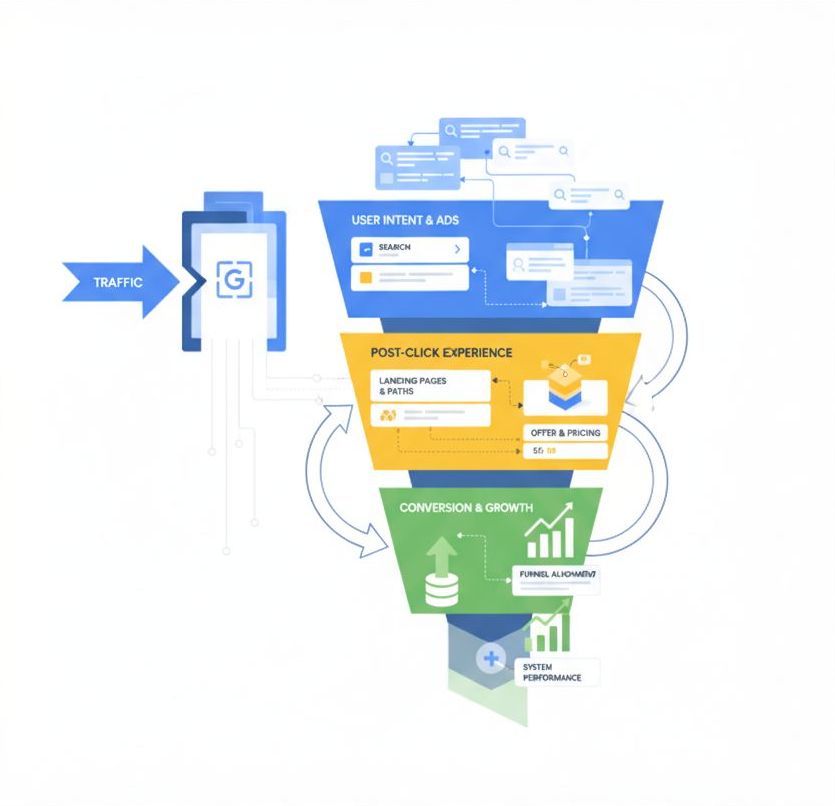
Traffic alone doesn’t create growth

Google ads don’t operate in isolation.

Performance depends on:

  • landing pages and conversion paths
  • offer clarity and pricing
  • alignment with customer intent
  • post-click experience

That’s why we always evaluate Google ads in the context of the full funnel — not just clicks and impressions.
Image

A hypothesis-driven approach to Google ads

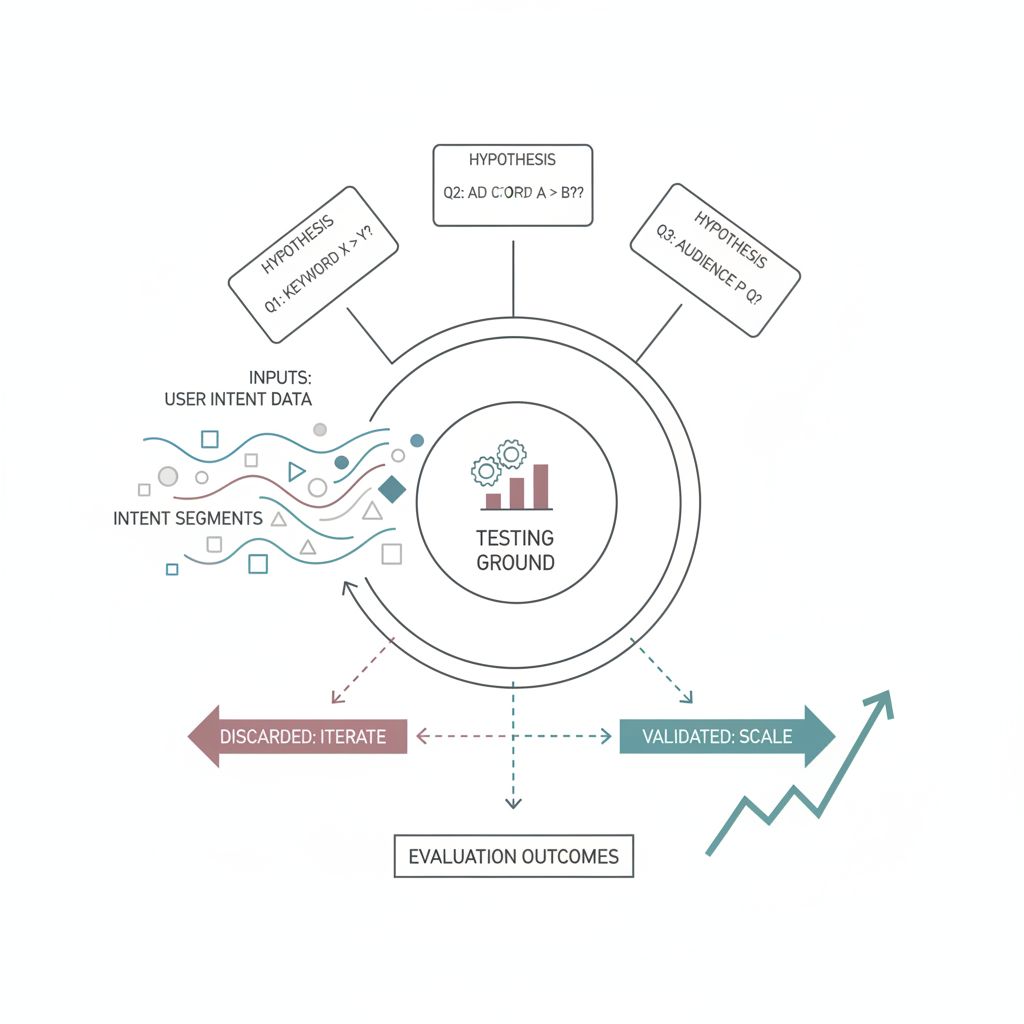
We don’t optimize campaigns blindly.

Each change is driven by a hypothesis:

  • which intent segments drive real value
  • where demand is being underutilized
  • what limits scale or efficiency

Hypotheses are tested, evaluated, and either scaled or discarded.
Image

Google Ads across growth scenarios

01

Market entry & validation

Ads are used to validate demand, messaging, and intent — not to force volume.
02

Controlled growth

Focus shifts to scalable intent segments and predictable acquisition.
03

Efficiency & profitability

Optimization prioritizes conversion quality and cost control.
04

Demand capture & defense

Google ads help secure high-intent traffic before competitors do.

Key focus areas

Intent before volume

Not all traffic is equal.

  • We prioritize intent quality over raw volume to ensure ads contribute to real outcomes.

Structure supports scale

Scaling without structure increases waste.

  • Account logic is designed to support growth without losing control.

Budget as a decision tool

Spend follows performance signals.

  • Budgets are allocated based on impact and opportunity, not habits.

Continuous adaptation

User behavior and competition evolve.

  • Campaigns are adjusted as search patterns and market dynamics change.

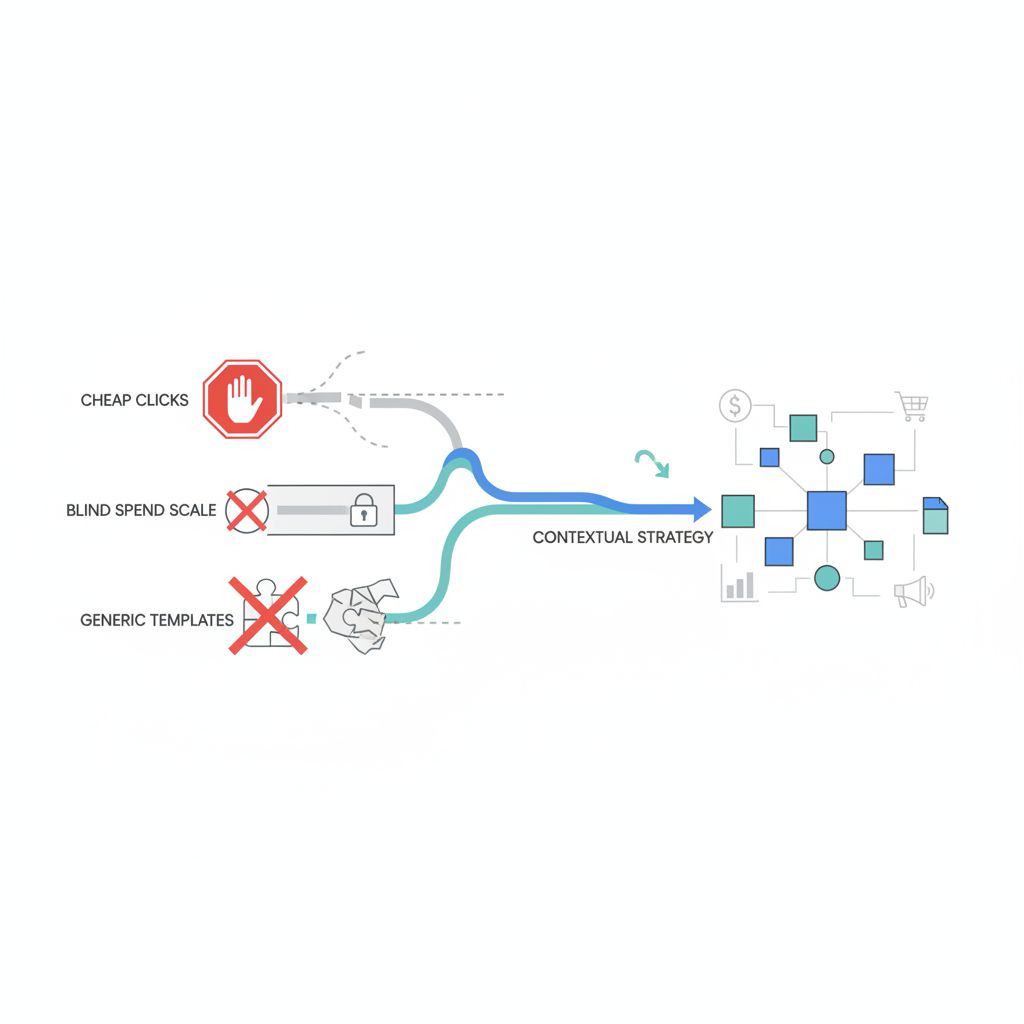
What we avoid in Google Ads

  • Chasing cheap clicks without conversion intent
  • Scaling spend without funnel readiness
  • Optimizing metrics without business context
  • Applying one-size-fits-all templates

Performance without context leads to inefficiency.
Image

The right way to approach Google Ads

A free audit helps determine whether Google ads are the right growth lever for your business — and how to approach them responsibly.
Get a free audit